
Water Extraction and Removal in Gaithersburg, MD: Get the Water Out First
Every minute that water sits on a floor, more of it moves into carpet padding, baseboards, and the bottom of the walls. Gaithersburg Restoration Expert removes standing and soaked-in water from houses, townhomes, condos, and businesses in Gaithersburg, Maryland, so the rest of the repair can begin from a smaller problem.
We take calls 24/7, and estimates are free. If water is still coming in, start with our emergency water damage restoration page, then come back here for how removal works.
- 24/7 Emergency Calls
- Free Estimates
- Licensed and Insured
Why Removal Has to Come Before Drying
Fans and dehumidifiers dry the air and the surface of materials, but they cannot do much about an inch of water lying on the floor. Pulling that water out first means the drying equipment has less to deal with, and it keeps the water from wicking further into wood, drywall, and insulation.
It is also the quickest way to see the real size of the loss. Once the floor is clear, we can read the walls and subfloor with moisture meters and decide what needs to happen next.
Where Gaithersburg Water Ends Up, and How We Remove It
Water goes where gravity and the building take it. The method depends on the surface.
Finished Basements and Window Wells
A basement collects whatever the rest of the house and the yard send down. We pump out standing water, extract what has soaked into carpet, and check the base of walls and the edges of the room, where water pools. We also look at the sump pit and the window wells to understand where the water entered.
Carpet and Padding
Carpet holds a lot of water, and the padding underneath holds even more. We use extraction tools to pull water from both layers, then check whether the padding can stay. Padding that stays soaked is often replaced, while carpet is sometimes worth saving.
Hardwood, Laminate, and Vinyl Floors
Water slips between planks and under the edges of flooring. We lift standing water first, then check the subfloor underneath. These floors can swell or warp, so we tell you early what looks salvageable and what may need to come up.
Garages, Utility Rooms, and Crawl Spaces
Water heater and washing machine leaks tend to collect in low, closed-in spaces where no one looks every day. We remove the water, clear the area so air can move, and check nearby walls for moisture.
Pumps, Wet Vacuums, and Matching the Tool to the Job
Not every wet floor needs the same equipment.
- Several inches of standing water: a submersible pump moves the bulk of it out quickly.
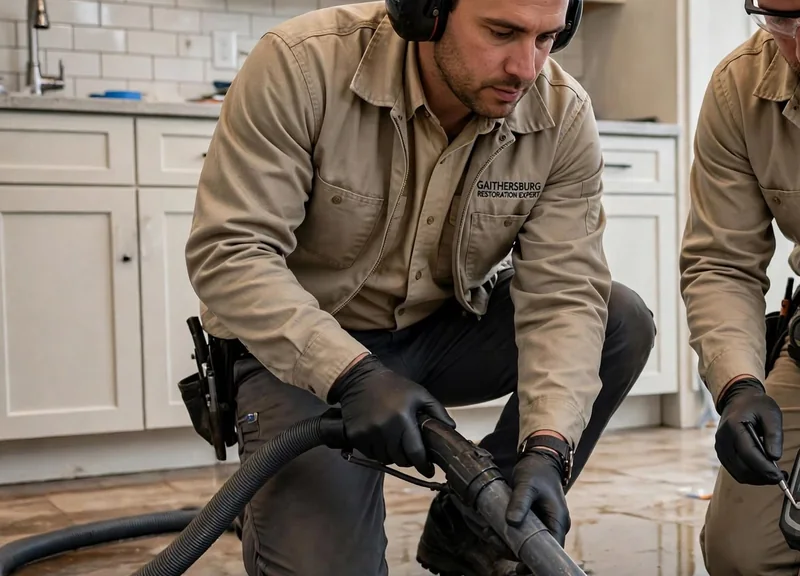
- A film of water or soaked carpet: wet vacuums and extraction wands pull moisture out of the surface and the fibers.
- Corners, stairs, and tight spaces: smaller tools reach the places a large machine cannot.
A household vacuum is not made for water and can be dangerous to use on a wet floor, so please leave that to us.
Clean Water, Gray Water, or Sewage: The Water Decides the Method
Water is sorted into categories, from clean water from a supply line (Category 1) to heavily contaminated water (Category 3), following ideas from the ANSI/IICRC S500 standard. The category decides what protective gear we wear and what has to be thrown away rather than dried.
Clean water from a broken supply pipe is the simplest case. Water that came in from outside, or that sat for days, needs more care. Sewage is contaminated and is handled under our sewage backup cleanup service, with protective equipment and disinfecting of affected areas.
What We Check Before the First Pump Starts
Before we start any equipment, our technicians walk the space and look for the following:
- Electrical hazards, such as submerged outlets, power strips, and wet panels
- How deep the water is and where it is coming from
- Signs that the water is contaminated
- Slip hazards and weak or sagging ceilings
If there is a risk we cannot control, we explain it and tell you what needs to happen first.
What Happens After the Water Is Out
Removal is the first step, not the last. We measure moisture in walls, floors, and framing to see what the water left behind, and then set up structural drying and dehumidification where it is needed. If carpet pad, insulation, or drywall cannot be dried, we explain your options so you can decide with clear information. We do not promise a set number of days, because drying depends on the building and the loss.
Questions Gaithersburg Owners Ask Before Water Removal
How Soon Should Standing Water Be Removed?
As soon as it is safe. Mold can begin to grow on wet materials after the first day or two, which is why EPA guidance stresses quick drying. Getting the standing water out is the first part of that, so call us as soon as you notice it.
Can I Remove the Water Myself With a Shop Vacuum?
For a small spill, a wet/dry shop vacuum designed for water can help. For anything bigger, or any water that may be contaminated or near electrical equipment, it is safer to call us. A vacuum also cannot reach the water that has soaked into padding, framing, or the subfloor.
Will Water Removal Save My Carpet and Flooring?
Sometimes. It depends on the type of water, how long it sat, and the material. We tell you what looks salvageable and what probably is not, so you are not guessing.
Water Removal Across 20878, 20877, 20886, and Neighboring ZIP Codes
We pump out and extract water in homes and businesses across Gaithersburg, including 20878, 20877, 20886, and 20879, and in nearby communities such as Germantown, Derwood, and Rockville. The right team depends on your exact address, so tell us where you are when you call. The areas we serve page lists every neighborhood and ZIP code.
Ask Us About Water Removal in Gaithersburg
Tell us where the water is, how deep it looks, where it came from, and whether it is still coming in. We will explain what happens next and give you a free estimate.