
Flood and Storm Damage Cleanup in Gaithersburg, MD: After the Water Recedes
The storm is over, the sky is clear, and the house is still wet. Floodwater and storm damage leave water, mud, and debris behind, plus moisture in places you cannot see. Gaithersburg Restoration Expert cleans up after floods and storms in homes, condos, and commercial buildings in Gaithersburg, Maryland, from pumping out water to drying and repairing the building.
Call us any hour, 24/7. Estimates are free.
- 24/7 Emergency Calls
- Free Estimates
- Licensed and Insured
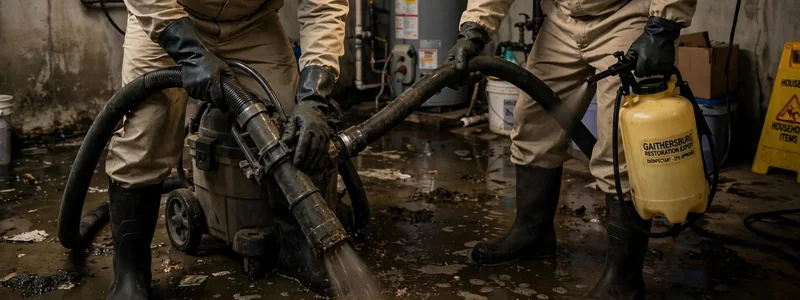
What a Storm Leaves Behind in a Building
Water in Low Areas
Basements, garages, and ground-floor rooms collect storm water first. It comes through window wells, doors, and foundation seams, or up through floor drains when the storm sewers back up.
Mud, Silt, and Debris
Floodwater from outside carries soil and debris. When it drains away, a layer of silt stays on floors and in corners, and it holds moisture against the surfaces under it.
Wind-Driven Rain Through Openings
Strong wind can push rain past roof flashing, around windows, and under doors. Where a branch has cracked a shingle or a window, water goes straight inside.
Power Outages and Sump Pump Failures
When the power goes out in a storm, a sump pump stops working just when it is needed. Check the pump when the storm passes, and call us if the pit has already overflowed.
Storm Water Is Not Clean Water
Water that comes in from outside has touched yards, streets, and drains. We treat it as contaminated and use protective equipment, which follows ideas from the ANSI/IICRC S500 water damage standard.
- Hard surfaces such as concrete, tile, and metal can usually be cleaned and disinfected.
- Carpet, padding, drywall, and insulation that sat in floodwater are usually removed, since they are very hard to make safe.
- Belongings are sorted into what can be cleaned and what cannot. Soft goods and paper that touched floodwater are often thrown away.
Stay Safe Before the Cleanup Starts
- Stay out of floodwater, which may be contaminated and may hide hazards or electrical current.
- Do not enter a flooded basement to reach the panel or turn off equipment.
- Keep away from downed power lines, and report them to your electric utility.
- Do not drive through flooded roads, because depth is hard to judge.
- Look for cracks, sagging ceilings, or shifted walls before you go back in.
- Wear boots and gloves if you must enter, and wash your hands afterward.
How We Clean Up After a Flood or Storm
- Assess the building. We check the water, the damage, and what is safe, and sort the water by type.
- Remove water and silt. We pump out standing water and extract what has soaked in. Water extraction and removal explains the tools we use. Mud and debris are cleared away.
- Take out what cannot be saved. Wet carpet, padding, drywall, and insulation that were contaminated by floodwater are removed.
- Clean and disinfect. Surfaces that stay are cleaned and then disinfected.
- Dry and monitor. Air movers and dehumidifiers dry the building, and we check moisture readings along the way.
- Repair. We can replace drywall, insulation, flooring, and trim so the space is usable again.
Drying time depends on how much water came in and how long it stayed, so we do not give a fixed schedule.
When the Storm Damaged the Roof
If water entered from above, the roof may need a roofer before the inside can be finished. Our roof leak water damage page explains how we repair the interior while the roofer works on the outside.
Mold Comes Fast After a Flood
A building that stays wet after a storm is a building where mold can start. The EPA says moisture control is the key to controlling mold, so the best defense is getting water out and drying quickly. If mold has already appeared, see our mold remediation page.
Flood Damage and Wind-Driven Rain Are Insured Differently
Standard homeowners policies often exclude rising floodwater, which is typically covered only by a separate flood policy, such as one through the National Flood Insurance Program. Rain that enters through a storm-damaged roof or window may be treated differently. Flood policies often have a waiting period, so check yours. We offer insurance claim assistance and can tell you what to photograph. Records help, but they cannot guarantee coverage.
Who Else You May Need
We handle water, mud, and the damaged building materials. You may also need:
- An electrician for wet panels, outlets, and wiring
- An HVAC technician for flooded furnaces, water heaters, or equipment
- A roofer for storm-damaged roofing
- A tree service for fallen limbs
Flood and Storm Cleanup Across 20878, 20877, 20886, and Nearby ZIP Codes
We respond to storm and flood damage across Gaithersburg, including 20878, 20877, 20886, and 20879, and in nearby communities such as Germantown, Derwood, and Rockville. After a big storm, many people call at once, so give us your address, tell us how bad it is, and we will tell you what is possible. See our areas we serve page for every neighborhood and ZIP code.
Ask Us About Storm or Flood Damage
Tell us how the water got in, how deep it was, and which rooms are affected. We will go over the cleanup plan with you and provide a free estimate.