
Basement Water Damage in Gaithersburg, MD: Flooded and Finished Basements
A finished basement is often the largest room in a Gaithersburg house, with carpet, drywall, a TV, and boxes of keepsakes, all sitting a few inches above a concrete floor. When water gets in, it reaches all of that at once. Gaithersburg Restoration Expert removes the water, dries the slab and framing, and repairs the damage in basements across Gaithersburg, Maryland.
Call us any hour, day or night. Estimates are free.
- 24/7 Emergency Calls
- Free Estimates
- Licensed and Insured
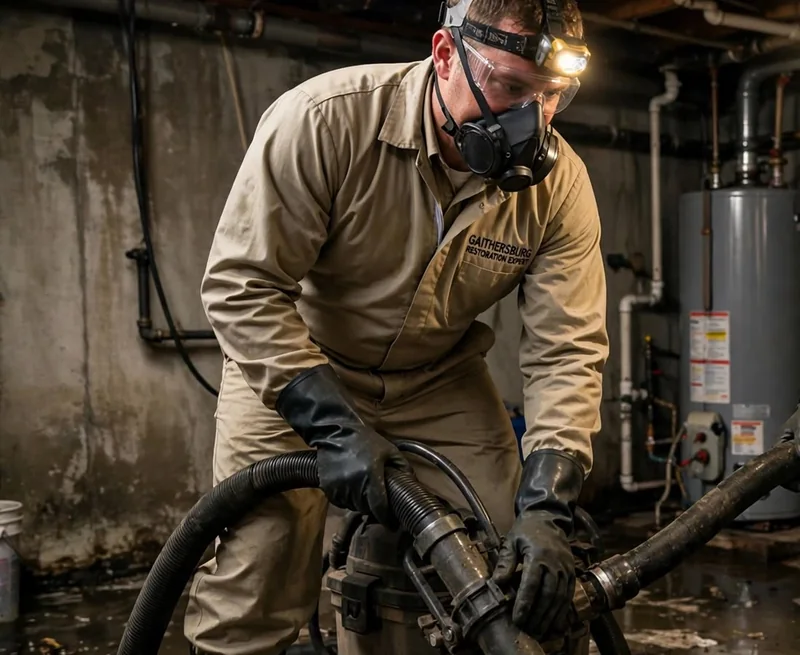
How Water Gets Into a Gaithersburg Basement
Knowing the way in tells you what to fix, and what to watch next time.
Through Window Wells and Egress Windows
Window wells fill with rain and leaves. When a well overflows or the drain at its bottom clogs, water can push past the window and into the room, usually along one wall.
Up Through the Floor and Along the Wall Joint
After long or heavy rain, water in the soil can press against the foundation and come in where the floor meets the wall, or through cracks in the slab. It may show as a dark line along the base of the wall before it shows as a puddle.
From the Sump Pit When the Pump Fails
A sump pump works hardest during a storm, which is also when the power can go out. A pump that stops, jams, or is overwhelmed lets the pit overflow onto the floor.
From Above: Pipes, Water Heaters, and Appliances
Basements hold the water heater, the washing machine, and pipes that run along the ceiling. A failure there sends water down through the ceiling or across the floor. Leaks inside ceilings and walls stay hidden, so structural drying and dehumidification is part of the fix.
Up Through Floor Drains and Sewer Lines
When a main drain backs up, the lowest drain in the house is where it shows. This is contaminated water. WSSC Water says the owner is generally responsible for the sewer line between the property line and the building, so call a plumber for the line, and see our sewage backup cleanup service for the cleanup.
How We Restore a Wet Basement
Removing the Water and Reading the Damage
We pump out standing water, extract what soaked into carpet and padding, and check the lower few feet of the walls with moisture meters. The meters show how far the water traveled behind the finish.
Deciding What Stays and What Goes
Carpet padding that sat in water is often replaced. Drywall that wicked water up from the floor may need to be cut back a short distance above the wet line so the insulation and framing behind it can dry. We show you what we found and explain the reason for each decision before work begins.
Drying the Slab, Framing, and Walls
Concrete holds moisture long after the surface looks dry. We place air movers and dehumidifiers and track moisture readings until the affected materials reach a dry state. We do not promise a set number of days, because the size of the loss and the building decide that.
Repairs and Rebuilding
After everything is dry, we can repair or replace drywall, insulation, trim, and flooring so the space is usable again. Tell us at the start if you want one team to handle the whole job.
Finished, Unfinished, and Walkout Basements Are Different Jobs
Finished Basements With Carpet and Drywall
The finishes hide the damage. We often find that water traveled much farther behind the walls and under the flooring than the visible wet spot suggests, so we measure before we decide anything.
Unfinished Basements and Storage Areas
Bare concrete and open framing dry more easily, but stored boxes, paper, and cardboard soak up water quickly and can grow mold if left wet. Moving them to a dry, ventilated place helps.
Walkout Basements and In-Law Suites
A walkout opens to the yard, so heavy rain can come in at the door or the threshold. If part of your basement is a rental or guest suite, tell us, because other people's belongings and your landlord or tenant duties may be involved.
Before We Arrive: Protecting What You Can
- Do not walk into a basement with standing water to reach the breaker panel. If you cannot reach it safely, call an electrician or your electric utility.
- Move furniture, boxes, and electronics to higher shelves or upstairs if it is safe.
- Photograph the water line and the damaged items before you move anything.
- Set aside wet cardboard and paper separately, since these items are the first to grow mold.
- Keep children and pets out of the area.
Mold After a Basement Flood
Basements stay cool and damp, and wet drywall or carpet can begin to grow mold sooner than most people expect. The EPA says moisture control is the key to mold control, which is why prompt drying matters. If mold has already appeared, our mold remediation service handles it, and we will tell you when a testing specialist is the better call.
Reducing the Chance of a Repeat
Nothing makes a basement flood-proof, but these steps can lower the risk:
- Test the sump pump before storm season, and ask about a battery backup.
- Clean gutters and extend downspouts away from the foundation.
- Keep window wells clear, and consider covers for them.
- Know where your main water shutoff is.
- Keep valuables off the floor.
Basement Water Damage Across 20878, 20877, 20886, and Nearby ZIP Codes
We work in basements across Gaithersburg, including 20878, 20877, 20886, and 20879, and in nearby communities such as Germantown, Derwood, and Rockville. A basement in an older house and one in a newer townhome are built differently, so tell us your address and what the space looks like. Every neighborhood and ZIP code is on the areas we serve page.
Ask Us About Your Basement
Tell us where the water came from, how deep it got, and what is in the room. We will explain the next step and give you a free estimate. Your insurer can tell you whether a sump pump overflow or water backup is covered, since those often need an added endorsement.